I met a young woman the other day who interprets for the Deaf.
I expected Auslan to be something functional and efficient, translating every word.
Kind of like manual subtitling.
But it isn’t.
It’s artistic. Emotional. Contextual. Personal.
“Signs are not just words shifted onto the hands,” Lily explained. “They are social and often faintly autobiographical.”
Lily showed me.
The sign for a librarian is a gesture that mimics a hair clip. Not a definition. A recognition. A stereotype. How librarians are seen, remembered, caricatured into something instantly legible.
I watched Lily colour her ideas with instinctive, minimalist hand gestures of place and time.
“How do your friends who are Deaf sign your name, Lily?” I asked. “Do they have a secret Auslan name for you?”
Lily smiled, a favourite image forming.
“I had a severe bob haircut once, so ‘Lily’ became an L-shaped hand moving down my hair, followed by a chopping motion at the shoulder.”
When a Name Becomes a Story
A shared, affectionate observation. Funny and intimate.
A name turned into a story.
A story turned into a gesture.
Something you only understand if you know her well enough.
I found myself tearing up.
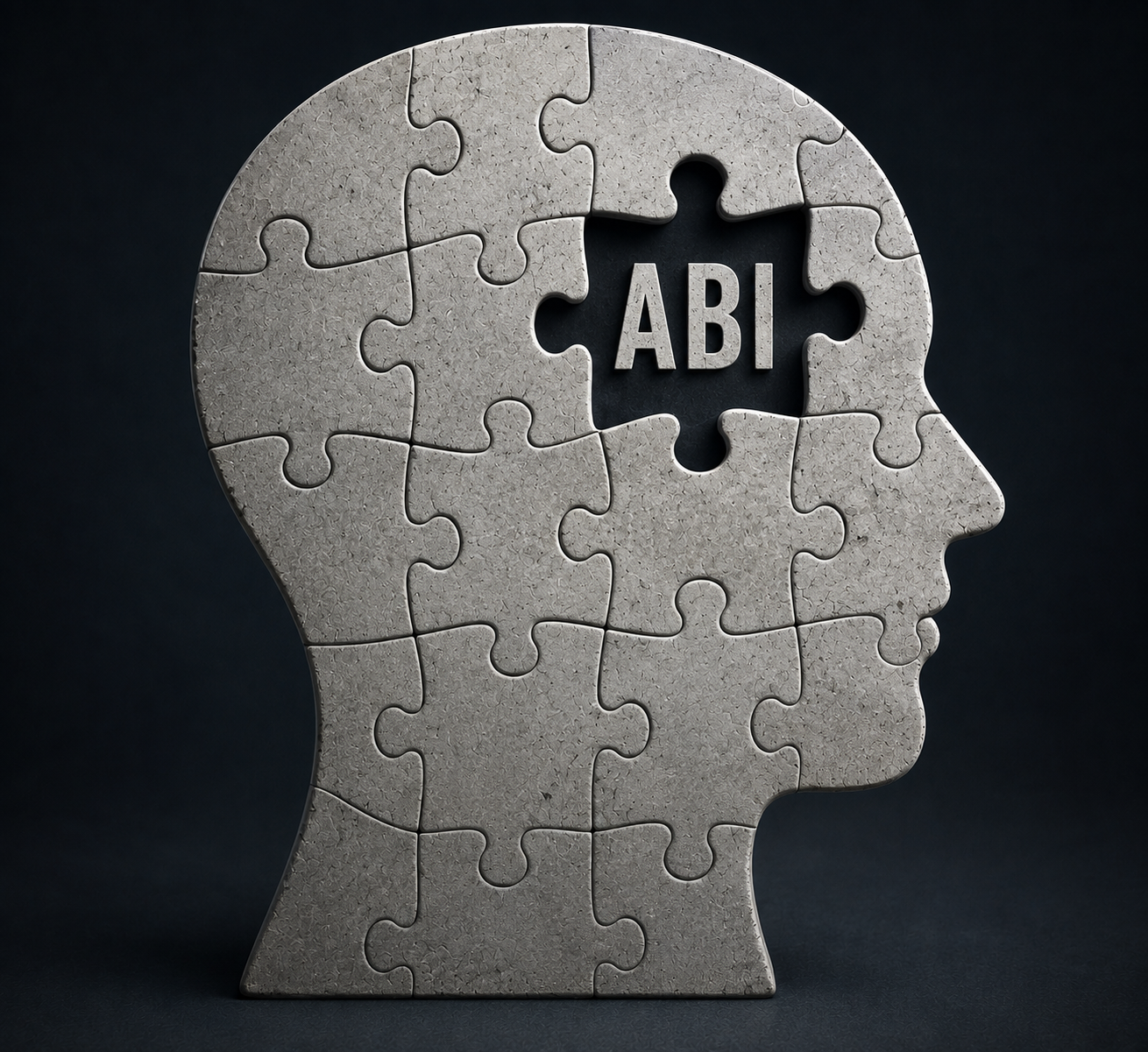
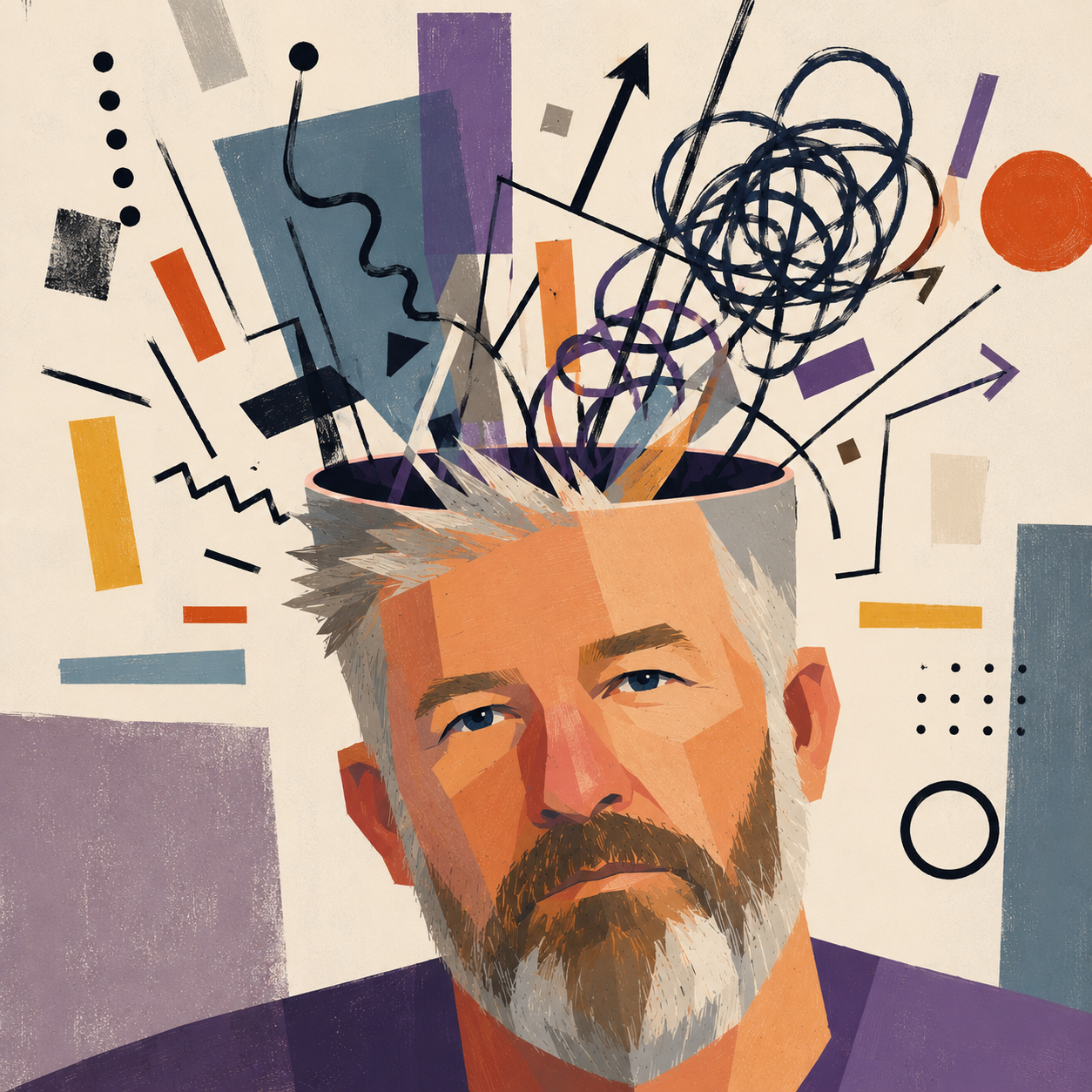
Names are a slippery struggle for me. An embarrassing weakness. Words too, sometimes, hovering and dissolving as I reach for them. It creates a quiet reluctance to socialise, to test myself, exhausted by the effort of seeming normal.
Our children can sign hunger and thirst long before they can speak. The comprehension is more fundamental than words.
I have built my own improvised system to sidestep the shame of forgetting.
Michelle, my OT, is a marathon runner. I wiggle my fingers like running legs, triggering the memory of the double “l” in her name.
Auslan and High Performance Communication
Auslan is not a crutch to lean on.
It is high performance communication.
Signs are dense and economical, loaded with imagery, history, and shared understanding. They do not politely queue like spoken words. They arrive whole. Visual. Spatial. Embodied.
Speech now seems oddly fragile by comparison. Linear. Sequential. Dependent on flawless retrieval. One missing word and the entire sentence stumbles.
Auslan reminds me of how I write: determined to create an impression, to evoke emotion rather than punctuate perfectly.
Like speech for the Deaf, enunciation is irrelevant. Meaning and context are everything.
Rethinking Communication After Brain Injury
The abrupt, traumatic changes in my life have opened unexpected ways of seeing.
I have learned that in Deaf culture:
Pointing is not rude.
Banging a table is not aggression.
Attention is negotiated physically, visibly, collectively.
Meaning lives in the body as much as the mind.
Lily introduced me to the phrase Deaf Gain, a provocative reframing suggesting deafness is not simply a loss of hearing, but a different sensory orientation bringing its own richness: visual acuity, spatial awareness, expressive nuance.
I watched the film CODA last night.
The finale.
The daughter sings while signing.
Voice and gesture layered together.
Music audible. Emotion visible.
Communication interpreted rather than merely translated.
Auslan feels strangely familiar. Less about correct vocabulary. More about conveying an idea.
Memory, Identity, and Visual Language
A feeling. A recognition. Memorably human.
I left the conversation knowing Lily not as a sequence of letters, but as a playful chopping motion at the neck.
How else would I remember a haircut I have never seen?
An abbreviated biography.
A visual shorthand.
A name less likely to drift away when my attention does.
Speech still matters. Of course it does.
But there is something quietly beautiful in discovering that meaning does not belong exclusively to the voice.
Sometimes the hands hold stories that the mind cannot carry.