In medicine there are always complicated, often stressful situations to manage, but experience teaches calm in high pressure moments, writes Dr Bruce Powell, with medical student Chelsea Bolland.
I mentor medical students whenever I get the chance. I do it because I enjoy it, but also because it helps me remember what medicine is like before experience changes how you think.
Recently, a student I work with told me about something that happened on the wards that unsettled her.
She was following a medical registrar during a shift when a MET call came through. For those not familiar, that’s an emergency call for a patient whose condition is getting worse – the pager sounds and everyone rushes to help.
The call was for a patient with low blood pressure. When they got there, the patient was sitting up in bed, she looked frail, but she was awake and talking. It didn’t seem like the dramatic emergency the alarm made it sound like.
I was what happened next that bothered the student. The senior doctor started talking about the patient’s resuscitation status and whether she should go to intensive care.
The patient’s relatives were there and became upset, which is understandable. To the student, it felt uncomfortable and sudden, she left wondering if something important had been overlooked.
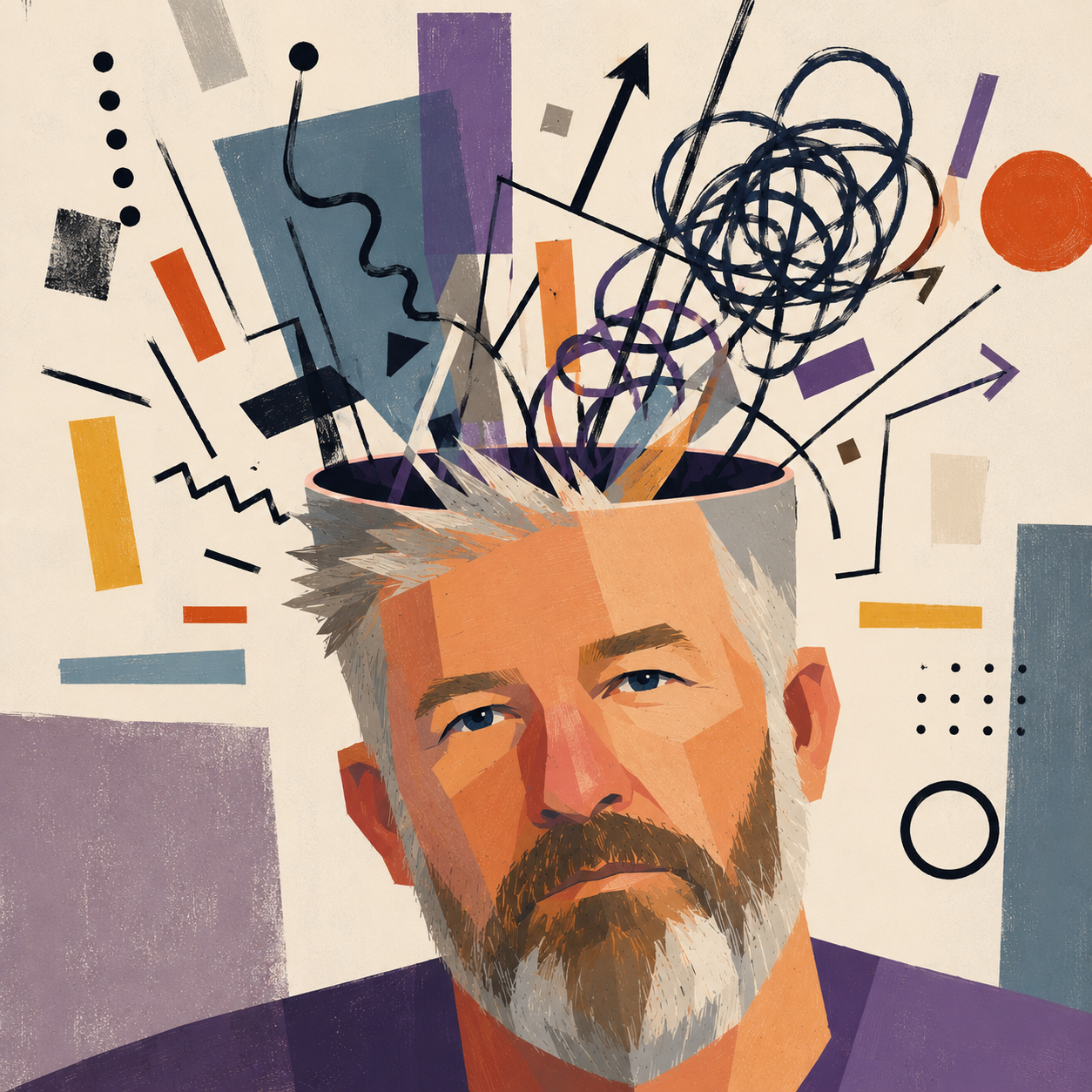
When she shared the story with me, I realised she had seen something that happens often in medicine – she had seen complexity.
But she hadn’t yet noticed the structure beneath all that complexity.
I asked her a simple question: “What was wrong with the patient?”
She paused: “I don’t know.”
And that is where the interesting part of medicine begins. When there’s an emergency call, you run, you don’t know if the patient is bleeding, can’t breathe, having a heart attack, or collapsing from an infection.
The criteria for these calls are broad on purpose because it’s much worse to miss a real emergency than to respond to a false alarm. But the moment you enter the room, something important happens – you begin applying structure.
The structure
In medicine, that structure is called ABC: airway, breathing, and circulation.
It might sound simple, even basic, but it’s one of the most powerful tools in clinical practice because it buys you time.
Imagine walking into the room and saying: “Hello Mrs Jones”.
She replies: “Hello doctor.”
That short conversation already tells you something important – her airway is open, she is breathing adequately, her brain is receiving enough oxygen to hold a conversation.
In just a few seconds, you’ve ruled out three serious problems. The emergency just became less urgent.
This is what high-performance thinking looks like in medicine. It’s not about knowing everything, it’s about quickly ruling out big dangers.
Asking the right questions
The student I mentor remembered something important: the patient felt dizzy when she stood up to go to the toilet.
Her blood pressure dropped for a moment, then came back up. That small detail rules out another group of possible causes.
Massive bleeding usually does not resolve spontaneously. A collapsed lung does not suddenly fix itself. A pulmonary embolus rarely disappears in two minutes.
But sometimes the heart acts up for a moment and then goes back to normal. Blood pressure can fall if someone stands up too fast. Older patients, for example, often have weaker cardiovascular reflexes.
Suddenly the problem begins to narrow, and the next steps become obvious:
Feel the pulse
Listen to the heart
Look for irregular rhythm
Check an ECG.
None of this takes genius, it just takes calm thinking and knowing how to ignore things that aren’t important yet.
This is where junior doctors often struggle. When you’re new, every detail seems important, you try to keep the whole problem in your head at once, which can be overwhelming.
Senior clinicians seem calm not because they’re smarter, but because they’ve learned to quickly set aside information they don’t need.
ABC becomes automatic. Patterns become recognisable. Complexity shrinks. That is high performance.
You see the same idea in aviation and emergency response teams. Pilots don’t make up procedures when an engine fails – they use checklists. Firefighters don’t consider every possibility before going into a building – they follow set protocols.
Having structure helps protect your mental energy and medicine is no different.
Not without risk
But high-performance thinking also carries a risk. If you simplify a problem too fast, you might be wrong.
That’s why good clinicians always ask themselves another question: “What else could this be?”
This skill isn’t just about narrowing things down; it’s about quietly keeping other possible explanations in mind while you check the most likely one.
Expertise isn’t about being certain, it’s about having disciplined doubt.
The medical student I mentor eventually understood what had happened that day. She thought medicine was about knowing the answer immediately, but it isn’t.
Medicine is about knowing how to think, even when you don’t have the answer yet.
When she first described the emergency call, it sounded chaotic, but beneath all the noise there was actually a simple process happening.
A few structured steps turned a scary alarm into a problem that could be managed.
That is what experience does. It transforms chaos into pattern and when that happens, complicated things start to seem surprisingly simple.
My thanks to the medical student who shared her reflections so vividly and passionately, all in the name of improving patient care.
Huge thanks to Andrea the Editor, and the team at Medical Forum for allowing retirees like me, and medical students like Chelsea Bolland to contribute to the journal and also re-publish it here.