It was just another Saturday morning. The duty consultant, Dr X, arrived in the intensive care unit for handover.
It was not a dramatic shift. No alarms. No collapsing physiology. The patients were ventilated, sedated and critically ill, but stable enough by ICU standards. In intensive care medicine, stability is relative.
X seemed quieter than usual. Slightly detached, perhaps, though nothing obvious enough to alarm anyone immediately.
We had all worked together for years. Intensive care consultants are generally steady creatures. Calm. Controlled. Predictable under pressure. Emotional neutrality is part of the job.
We started the ward round.
At the first bed space, X listened carefully to the overnight events, reviewed the scans and stood silently at the end of the bed for a while.
“I think we should withdraw treatment. The time has come.”
It was not an irrational opinion. These decisions are common in intensive care medicine. There is never an easy moment to recognise that survival and recovery are no longer realistic goals.
But something felt different.
At the second bed, the same conclusion emerged. Then the third.
By the time we reached the far side of the unit, X had recommended withdrawing treatment from almost every patient on the ward.
Not emotionally. Not dramatically. Calmly and matter-of-factly.
As though the underlying logic of intensive care medicine had quietly stopped making sense to him. The suffering. The interventions. The endless negotiation with death.
The senior ICU nurse appeared briefly, then disappeared again. Another consultant arrived on the unit. There was a short, quiet conversation behind the desk. No confrontation. No raised voices.
A few minutes later, X gathered his things and went home.
He did not return to work for several months.
At the time, we treated it rather lightly.
“X has gone mad.”
We laughed about it in the pub later that evening.
I understand it differently now.
I had witnessed something beyond ordinary exhaustion. Not weakness exactly. More of a collapse of meaning.
For years, I assumed the work itself would be what eventually broke me, too.
In retrospect, the opposite may have been true.
The work survived untouched long after other parts of life had begun quietly eroding around it.
I narrowed my world instead. Drew heavily from family life while contributing less back. Withdrew socially. Reduced life down to the minimum necessary to remain professionally functional.
I drank more than I should have.
I rode harder and further than was sensible.
The bike became less of an exercise than a temporary disappearance.
Out there, nobody could call me.
Nobody needed another decision about burns, trauma or death.
The last thing that would have failed was probably the job itself.
That experience leaves me slightly uneasy with some modern conversations around burnout and trauma. Not because I doubt their reality. Quite the opposite. Medicine has historically been poor at recognising emotional strain, psychological injury and moral burden among clinicians. Many people suffered silently for years because stoicism was rewarded professionally and culturally.
It is unquestionably healthier that younger clinicians now speak more openly.
But language matters too.
Terms such as burnout and trauma have gradually expanded to encompass an increasingly broad range of human distress. Often, that broadening reflects compassion and early recognition rather than exaggeration. Distress deserves attention long before collapse occurs.
Yet as the boundaries widen, precision becomes harder to maintain.
Experiences with profoundly different consequences can begin to occupy similar emotional vocabulary, even when the underlying realities remain radically different.
Then I woke up in an ICU bed myself.
On the other side.
Literally.
What surprised me most after the injury was not simply the suffering, but the strange redistribution of emotional gravity around it.
As a doctor, nobody particularly wanted vulnerability from the intensive care consultant during a resuscitation. My role was to absorb uncertainty while remaining calm and functional.
Patients and families did not need my emotional honesty in those moments. They needed competence.
After becoming the patient, however, I entered a world increasingly organised around therapeutic language, where everyone understandably had feelings about the injury.
Doctors discussed burnout.
Therapists discussed trauma.
Family members described how frightening and exhausting the experience had been for them.
Meanwhile, the person with the damaged brain often found himself quietly reassuring everybody else.
I suspect many people living with severe illness or injury recognise this inversion. Once suffering becomes sufficiently disruptive, survival itself often becomes the task. Some people collapse visibly. Others become frighteningly functional. Either way, the available language can begin to feel strangely inadequate.
What I find hardest now is not simply the injury itself, but the constant requirement to remain measured and compassionate while privately struggling to extend much compassion towards myself.
I spend considerable time monitoring my own behaviour.
Moderating tone.
Controlling energy.
Reviewing emotional reactions.
Trying to distinguish legitimate frustration from impaired impulse control.
Brain injury creates a strange form of internal surveillance. You become the patient and the policeman at the same time.
Oddly, I rarely permit myself the luxury of saying:
“Well, I have a brain injury.”
In fact, I often move in the opposite direction. I become harsher with myself precisely because the injury is real. I worry about becoming self-absorbed, indulgent or defined entirely by it.
So, there are moments during meetings or difficult conversations when I feel an almost absurd internal contradiction. Everyone else is permitted emotional framing while I sit there trying to remain calm, socially appropriate and professionally reasonable despite being the person with the actual neurological injury.
Deep down, I still expect myself to be the calm one in the room.
I understand why clinicians become burnt out caring for critically ill patients. Intensive care medicine leaves marks on people. Repeated exposure to death, uncertainty and responsibility inevitably changes how clinicians see themselves and the world around them.
But there remains an important distinction between carrying responsibility for catastrophe and permanently losing parts of yourself to it.
Modern culture often struggles with gradations of suffering because hierarchy can sound cruel or dismissive. Understandably, we fear minimising distress. The result, sometimes, is that very different forms of suffering begin collapsing into the same emotional vocabulary.
The problem is not compassion.
The problem is precision.
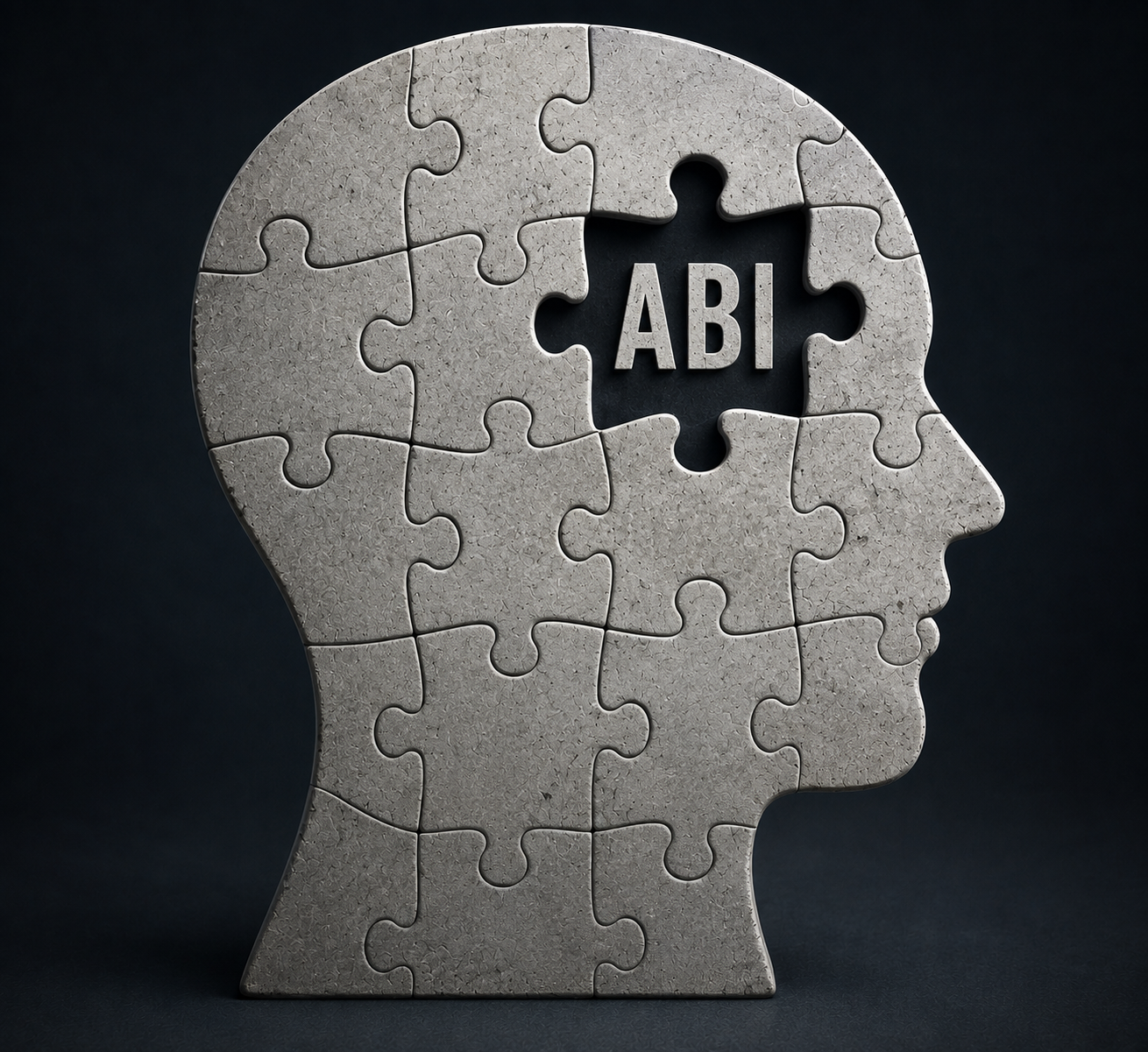
Because severe injury does not simply produce distress. It can alter identity itself. It fractures continuity between past and future. It changes cognition, relationships, ambition, independence and self-perception simultaneously.
Some forms of suffering are not temporary emotional states. They are permanent structural changes to a human life.
That does not invalidate lesser suffering. Distress matters long before catastrophe occurs. Burnout among clinicians is real. Psychological trauma is real. Invisible suffering can still be profound.
But people living with severe neurological injury sometimes become quieter precisely because the available vocabulary no longer feels large enough for what has been lost.
I no longer particularly want labels for myself. Not because psychology lacks value, but because I have become wary of identities organised entirely around injury. Sometimes the explanation quietly becomes the future.
The harder question after a catastrophe is not simply whether suffering is valid.
It is what now?
How do people construct meaning from damaged material without pretending the damage is insignificant?
Medicine left me with many flaws, but perhaps one useful instinct remains.
Not who has suffered more.
Not who deserves sympathy.
The real question is ‘What now?’
How do we move forward from here?